The Role of the 3D School Bag Icon in Modern Educational Design
In the rapidly evolving landscape of digital design, visual communication has become the cornerstone of effective engagement. Nowhere is this more apparent than in the education sector, where designers, educators, and marketers strive to create materials that are both informative and emotionally resonant. Among the myriad of visual assets available, the School Bag Icon stands out as a quintessential symbol of learning, preparation, and academic journey. Specifically, high-quality 3D renderings of this icon have transformed how we approach educational branding and user interface design. This article explores the significance, application, and technical considerations of using a detailed 3D School Bag Icon in contemporary projects.
The Semiotics of the School Bag in Education
To understand why a school bag icon is so effective, we must first look at what it represents beyond its physical form. In semiotics—the study of signs and symbols—a school bag is not merely a container for books; it is a cultural artifact loaded with meaning. It signifies readiness, the transition from home to learning environments, and the personal responsibility of the student. When used in digital media, this icon triggers immediate cognitive associations with education, childhood development, and structured learning.
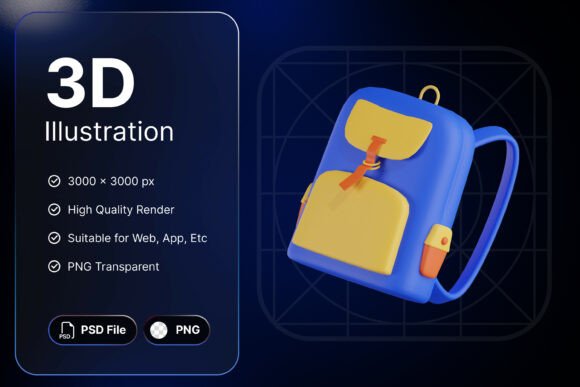
For general readers and designers alike, recognizing this symbolic weight is crucial. A flat, two-dimensional vector might convey the basic shape, but a detailed 3D School Bag Icon captures the spirit of education with a playful yet modern design. The depth, lighting, and texture inherent in 3D rendering add a layer of tangibility that makes the concept of "school" feel accessible and inviting rather than sterile or bureaucratic. This emotional connection is vital for student-focused apps and classroom resources where user engagement depends on creating a welcoming atmosphere.
The Shift Toward 3D Visuals in EdTech
The design trends within Educational Technology (EdTech) have shifted dramatically over the last decade. We have moved away from rigid, corporate aesthetics toward softer, more immersive visual languages. This shift mirrors changes in pedagogy itself, which increasingly values student-centered, experiential learning. 3D icons fit perfectly into this paradigm because they mimic the physical world while maintaining the cleanliness of digital interfaces.
When designing for school campaigns or learning-themed branding, the choice between 2D and 3D can define the tone of the project. 3D assets offer several distinct advantages:
- Visual Hierarchy: The volume and shadow of a 3D icon naturally draw the eye, making it an excellent focal point for navigation menus or call-to-action buttons.
- Modern Appeal: High-resolution 3D renders signal that an institution or app is current and technologically proficient, which builds trust with parents and students.
- Playfulness: The rounded edges and soft lighting typical of modern 3D illustration styles reduce anxiety associated with testing or rigorous study, promoting a growth mindset.
Technical Specifications and Practical Application
Understanding the artistic value is only half the equation; practical implementation requires attention to technical specifications. When sourcing or utilizing a premium asset like the one described here, specific features dictate its utility across different platforms. The asset in question boasts a High-resolution 3000x3000px dimension, which is a critical benchmark for versatility.
Resolution and Scalability
A 3000x3000px canvas ensures that the icon remains crisp on high-density displays, such as Retina screens on tablets and smartphones. In educational settings, where students frequently use iPads or Chromebooks, pixelation can detract from the perceived quality of the content. Furthermore, starting with a large file allows designers to scale down without losing detail. While upscaling a small image often results in artifacts, downscaling a high-resolution PNG preserves the integrity of the 3D render’s textures and shadows.
Transparency and Integration
The inclusion of a Transparent Background is non-negotiable for professional design work. This feature allows the school bag icon to be layered seamlessly over colored backgrounds, photographs, or complex patterns without unsightly white boxes. For web developers and app designers, this means faster integration times and cleaner code. Whether placing the icon on a vibrant landing page for a summer camp or embedding it into a minimalist learning management system (LMS), transparency ensures the asset adapts to the environment rather than dominating it clumsily.
File Formats: PNG vs. PSD
This asset package provides both PNG and PSD files, each serving a distinct purpose in the workflow. The PNG is the "ready-to-use" format, optimized for immediate deployment in presentations, websites, and print materials. The PSD (Photoshop Document) serves as a master reference. Even if you cannot alter the core geometry, having the layered source file can be invaluable for adjusting overall brightness, applying global color grading filters, or extracting specific shadow layers for advanced compositing.
Navigating Asset Limitations and Consistency
It is important to address a common misunderstanding regarding pre-rendered 3D assets. Users accustomed to vector graphics often assume they can freely change colors and shapes. However, a key note for this specific School Bag Icon is that all assets cannot be changed in color and shape. Understanding this limitation is actually a benefit when viewed through the lens of design consistency.
Because the lighting, material properties, and geometry are baked into the render, the icon maintains a fixed identity. This prevents accidental brand dilution where a junior designer might inadvertently alter the hue to clash with the rest of the interface. It enforces a cohesive visual language. If your project requires a specific color palette that matches this icon exactly, it guarantees that every instance of the bag looks identical, preserving the professional polish of the final product. For projects requiring total customization, this serves as a reminder to verify asset flexibility before purchase, but for campaigns seeking a reliable, high-quality anchor image, fixed assets provide stability.
Use Cases Across the Educational Spectrum
The versatility of a high-quality school bag icon extends far beyond simple decoration. Here is how different stakeholders leverage this asset:
- Student-Focused Apps: Gamified learning platforms use the backpack as a universal metaphor for inventory, progress tracking, or resource collection. The 3D style aligns with gaming aesthetics, making homework feel less like a chore.
- School Campaigns: Admissions brochures and back-to-school social media posts utilize the icon to evoke nostalgia and excitement. The high resolution ensures it looks sharp on both Instagram feeds and printed flyers.
- Classroom Resources: Teachers creating worksheets, slide decks, or digital badges use the icon to categorize content. A visually appealing header can increase student attention span and information retention.
- Learning-Themed Branding: Tutoring centers and educational consultancies use the icon in logos or watermarks to instantly communicate their niche without needing explanatory text.
Best Practices for Implementation
To maximize the impact of this 3D School Bag Icon, consider the following best practices rooted in accessibility and user experience (UX):
- Alt Text: Always describe the icon accurately for screen readers. Instead of just "bag," use "3D illustration of a blue school backpack representing student resources."
- Contextual Placement: Pair the icon with clear typography. The playful nature of the 3D render should be balanced with legible, serious fonts if the content is academic, or rounded sans-serifs if the content is for younger children.
- Whitespace: Allow the 3D object to breathe. Crowding it against text diminishes the depth effect that makes it special.
- Consistency: If using this icon as part of a set, ensure other icons share the same lighting direction and art style to avoid a disjointed user interface.
Conclusion
The School Bag Icon is more than a decorative element; it is a functional tool of communication in the digital education space. By combining the universal symbolism of the backpack with the modern aesthetic of high-resolution 3D rendering, designers can create experiences that are both visually stunning and deeply meaningful. Whether you are building a student app, designing classroom materials, or launching a marketing campaign, understanding the technical specs—from the 3000x3000px resolution to the transparent background—and respecting the asset's fixed nature ensures professional results. Ultimately, this icon bridges the gap between traditional educational values and modern digital innovation, helping learners of all ages feel prepared, inspired, and ready to explore.