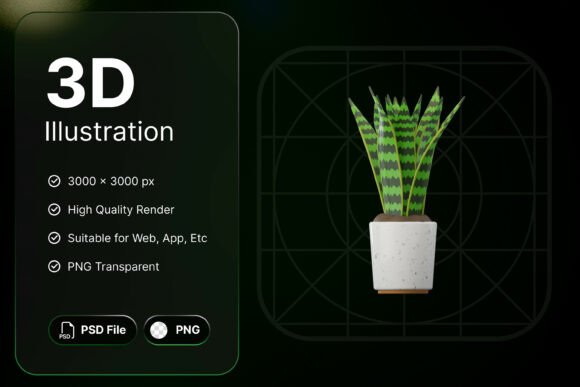
Evaluating the Modern 3D Snake Plant Icon for Professional Design Workflows
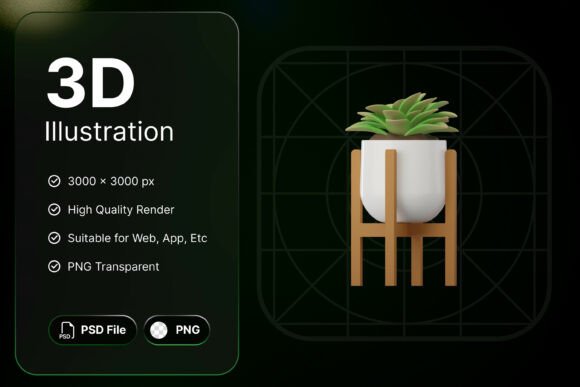
In the evolving landscape of digital asset creation, the distinction between flat vector graphics and high-fidelity 3D rendering has become increasingly significant for visual communication. The Snake Plant Icon represents a specific niche within this spectrum, offering a modern 3D interpretation of Sansevieria trifasciata that prioritizes botanical accuracy alongside contemporary aesthetic trends. For professionals managing interior design portfolios, wellness brands, or gardening e-commerce platforms, the choice of iconography often dictates the perceived quality of the entire project. This particular asset moves beyond generic clip art by providing distinctive upright leaves and realistic texturing that aligns with current UI/UX and editorial standards.
Understanding the practical utility of this asset requires looking past its visual appeal to examine its technical specifications and workflow integration. At 3000x3000px resolution, it is engineered for versatility across both high-density digital displays and print media. However, its value proposition is heavily tied to its fixed nature; unlike parametric 3D models or layered vectors, this asset cannot be altered in color or shape. This limitation defines its ideal use case: projects requiring consistent, polished visuals without the need for iterative customization. Evaluating whether this Snake Plant Icon fits your production pipeline involves balancing its immediate readiness against the flexibility requirements of your specific deliverables.
Technical Specifications and Visual Fidelity
The primary strength of this modern 3D Snake Plant Icon lies in its resolution and rendering quality. In professional design environments, assets must withstand scrutiny on Retina displays and large-format prints without artifacting or pixelation. The 3000x3000px dimension provides sufficient pixel density to maintain crisp edges and smooth gradients even when scaled down significantly for mobile interfaces or up moderately for brochure layouts. This resolution standard ensures that the subtle lighting effects and surface textures characteristic of high-quality 3D renders remain intact during post-production resizing.
Visual fidelity extends beyond mere pixel count to encompass botanical realism and stylistic coherence. The icon captures the architectural rigidity of snake plant leaves, avoiding the plastic-like sheen common in lower-tier 3D stock assets. The matte texture and variegated leaf patterns are rendered with enough subtlety to function as a decorative element rather than a distracting focal point. For interior design content and home décor brands, this level of detail supports a premium narrative. The transparent background further enhances usability, allowing designers to composite the asset over complex textures, colored sections, or photographic backgrounds without tedious masking or edge cleanup.
File Format Utility and Integration
The delivery package includes both PNG and PSD formats, each serving distinct functions in a professional workflow. The PNG file acts as the primary workhorse for web development, presentation decks, and quick mockups. Its transparency support and lossless compression make it ideal for direct implementation in CMS platforms, social media templates, and digital publications where file size and load speed are considerations alongside visual quality.
The inclusion of a PSD file adds a layer of non-destructive editing capability, albeit within strict boundaries. While users cannot modify the plant’s geometry or hue due to the flattened nature of the render layers, the PSD allows for advanced compositing techniques. Designers can apply adjustment layers, shadows, or blending modes above the base asset to better integrate it into specific lighting environments or brand palettes. This format is particularly valuable for print designers who need to manage color profiles or embed the asset within multi-layered layouts while preserving maximum source quality. It bridges the gap between a static image and a fully editable design component.
Practical Applications Across Industries
Different sectors leverage botanical imagery for varied strategic purposes, and the Snake Plant Icon serves multiple verticals effectively. In the wellness and mental health space, snake plants are symbolically linked to air purification and resilience. A high-quality 3D representation reinforces themes of cleanliness, modernity, and self-care more effectively than dated illustrations. Wellness apps, meditation guides, and spa branding benefit from an asset that feels serene yet technologically current, matching the sophisticated expectations of users aged 20–50.
For gardening brands and plant care educators, accuracy is paramount. Generic plant icons often fail to convey species-specific traits, leading to confusion among enthusiasts. This asset’s faithful depiction of upright growth habits and leaf structure makes it suitable for instructional content, identification guides, and product categorization. Similarly, interior designers and real estate marketers use such assets to stage digital floor plans or enhance listing presentations. The modern 3D style complements contemporary furniture renders and architectural visualizations, maintaining stylistic consistency across mixed-media collateral.
- Interior Design Portfolios: Enhances mood boards and digital staging with botanically accurate greenery that matches modern furniture aesthetics.
- Wellness & Health Brands: Provides a clean, calming visual anchor for apps, blogs, and packaging that emphasizes purity and natural living.
- Gardening E-Commerce: Serves as reliable category iconography or supplementary visuals for care guides where photography may be inconsistent.
- Editorial & Publishing: Offers high-resolution spot illustrations for articles on biophilic design, sustainable living, or home organization.
- Digital Product Creation: Functions as a premium element in planner stickers, notion templates, or social media kits targeting lifestyle audiences.
Assessing Limitations and Workflow Constraints
A critical evaluation of any digital asset must address its limitations as honestly as its strengths. The explicit note that all assets cannot be changed in color or shape is the defining constraint of this Snake Plant Icon. For projects requiring seasonal variations, custom brand color matching, or alternative compositions, this asset will not suffice. Designers accustomed to vector workflows where every node is adjustable may find the static nature restrictive. It is essential to verify that the existing color palette and form factor align perfectly with your project guidelines before acquisition.
Furthermore, while 3000x3000px is robust for most applications, it is not infinite. Large-scale environmental graphics or billboard-sized prints may require higher resolution sources or true 3D files. The asset is optimized for screen-based media and standard commercial printing, not industrial-scale reproduction. Additionally, the fixed lighting direction inherent in the 3D render means the icon has a preferred orientation. Attempting to flip or rotate it drastically may result in unnatural shadow casting that breaks visual believability. Successful integration requires respecting the original lighting setup or using the PSD to paint corrective shadows.
Long-Term Value and Asset Management
Beyond immediate project needs, professionals must consider the longevity and reusability of their asset libraries. Botanical elements, particularly classic species like the snake plant, possess timeless appeal that resists trend cycles. Unlike abstract 3D shapes or meme-referencing graphics, a realistic plant icon retains relevance across years of campaigns. Investing in high-resolution, well-rendered versions reduces the need for frequent replacements as display technologies advance. The dual-format delivery ensures the asset remains accessible regardless of software ecosystem shifts; even if PSD support wanes in certain tools, the PNG guarantees perpetual usability.
From a licensing and organizational perspective, having a definitive, unchangeable master asset simplifies version control. Teams avoid the chaos of multiple designers creating slightly divergent variations of the same plant. Consistency in visual language builds stronger brand recognition, especially for businesses producing high volumes of content. When every blog post, social graphic, and product page uses identical botanical references, the cumulative effect is one of professionalism and attention to detail. This Snake Plant Icon functions best as part of a curated system where its fixed attributes become a reliable constant amid variable content.
Determining Fit for Your Creative Objectives
Ultimately, the decision to incorporate this modern 3D Snake Plant Icon should stem from a clear alignment between asset capabilities and project demands. It is an excellent solution for creators who prioritize immediate deployment, visual polish, and botanical accuracy over malleability. Freelancers building template packs, marketers assembling campaign assets under tight deadlines, and small business owners seeking premium visuals without commissioning custom 3D work will find significant ROI. The ready-to-use nature eliminates hours of modeling, texturing, and rendering time.
Conversely, those requiring deep customization, dynamic posing, or integration into interactive 3D environments should seek alternative resources. If your brand guidelines mandate specific Pantone colors for all graphical elements, or if you need the plant to interact physically with other objects in a scene, this static icon will introduce friction rather than efficiency. Evaluate your upcoming content calendar and design system requirements objectively. When the need is for a beautiful, consistent, and technically sound representation of Sansevieria that works seamlessly across digital and print touchpoints, this asset delivers precisely what it promises without unnecessary complexity.