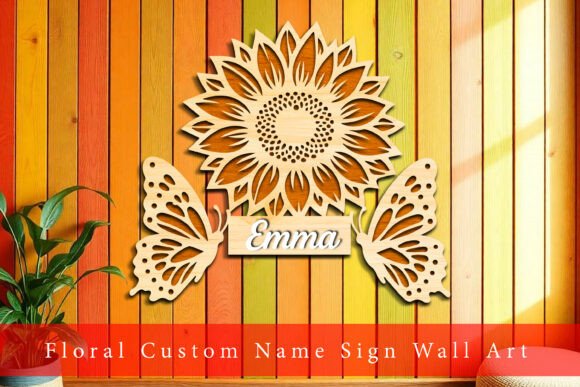
Floral Custom Name Sign Wall Art: Design, Formats, and Creative Applications
In the evolving landscape of personalized home decor, few elements carry as much emotional resonance and aesthetic appeal as Floral Custom Name Sign Wall Art. This specific niche of digital design and physical craftsmanship bridges the gap between traditional signage and modern fabrication technology. Whether you are a professional sign maker, a DIY enthusiast with a Cricut or Silhouette machine, or a parent designing a nursery, understanding the technical and artistic nuances of these designs is essential for achieving professional results.
The popularity of botanical themes, particularly sunflower motifs, stems from their versatility. They offer a warm, organic frame that softens the rigid typography of names and dates. However, creating or purchasing this art requires more than just selecting a pretty image. It demands an understanding of file formats, material compatibility, and layering techniques to transform a digital concept into a tangible masterpiece.
Understanding the Digital Asset Ecosystem
When acquiring a design for Floral Custom Name Sign Wall Art, the value lies not just in the visual preview but in the comprehensive package of source files. A high-quality digital download typically arrives as a ZIP file containing multiple formats: AI, EPS, SVG, JPG, PNG, DXF, and DWG. Understanding the distinct purpose of each format prevents frustration during the creation process and ensures compatibility with your specific hardware.
Vector Formats for Fabrication
For laser cutting and vinyl plotting, vector-based files are non-negotiable. Unlike raster images, vectors use mathematical paths rather than pixels, allowing them to be scaled infinitely without losing quality.
- SVG (Scalable Vector Graphics): The industry standard for craft cutters like Cricut Design Space and Silhouette Studio. SVGs retain layer information, meaning the sunflower petals, leaves, and text remain separate elements that can be colored individually or assembled in 3D.
- DXF (Drawing Exchange Format): Essential for users of free software editions or older cutting machines. DXF files often simplify complex curves into straight line segments, which can sometimes result in jagged edges on intricate floral designs. Always test a small section before committing to a full cut.
- AI and EPS: These are professional-grade formats used in Adobe Illustrator and CorelDRAW. They are crucial for commercial sign makers who need to manipulate anchor points, adjust stroke widths, or completely redesign the floral arrangement to fit unique dimensions.
- DWG: Primarily used in CAD software and industrial laser systems. If you are operating a CO2 or fiber laser in a workshop environment, DWG provides the precise geometric data required for accurate engraving and cutting.
Raster Formats for Visualization
While JPG and PNG files cannot be used directly for cutting, they serve a vital role in the workflow of Floral Custom Name Sign Wall Art. High-resolution PNGs with transparent backgrounds are perfect for creating mockups, printing sublimation transfers, or serving as reference guides when painting hand-cut wooden pieces. They allow creators to visualize the final color palette before wasting expensive materials.
Material Selection and Layering Strategies
The transition from screen to physical object relies heavily on material choice. The "Sunflower Name Sign" aesthetic is uniquely suited to multi-layered construction, where depth creates visual interest. Evaluating the right substrate is a critical step in the planning phase.
Wood and MDF Considerations
Baltic birch plywood and medium-density fiberboard (MDF) are the most common substrates for this type of wall art. For a detailed sunflower frame, 1/8-inch (3mm) thickness is generally ideal. Thicker wood may require multiple passes on a laser cutter, leading to charred edges that detract from the delicate floral details. When using paint-grade MDF, ensure the surface is sealed properly; the porous nature of raw MDF can absorb paint unevenly, making the crisp lines of the name sign appear muddy.
Acrylic and Vinyl Combinations
Modern interpretations of Floral Custom Name Sign Wall Art often incorporate acrylic mirrors or colored cast acrylics. These materials add a contemporary sheen that contrasts beautifully with matte wood. However, working with acrylic requires different blade settings and slower cutting speeds to prevent melting. Combining permanent vinyl overlays on painted wood bases is another popular technique, allowing for intricate inner details that might be too fragile to cut out of wood alone.
Practical Applications and Use Cases
The adaptability of floral name signs extends far beyond simple decoration. Different environments impose different requirements regarding durability, scale, and style.
Nursery and Children’s Spaces
In nursery design, safety and tone are paramount. Floral custom name signs here typically feature softer, rounded fonts paired with the sunflower motif to evoke warmth and growth. From a practical standpoint, these signs should be lightweight and securely mounted. Using adhesive mounting strips rather than heavy nails reduces the risk of accidents. The editable nature of the SVG allows parents to include birth statistics—weight, time, and date—integrated seamlessly into the floral border.
Weddings and Event Signage
For weddings, Floral Custom Name Sign Wall Art serves dual purposes as decor and wayfinding. Welcome signs, seating charts, and table numbers benefit from the cohesive branding that a consistent floral theme provides. Durability is a key consideration here; outdoor events require UV-resistant paints and weather-sealed finishes to prevent warping or fading. The ability to resize the master vector file means a single design can be adapted from a large 24-inch welcome sign down to 4-inch cake toppers without redrawing the artwork.
Commercial and Retail Branding
Small businesses, particularly florists, salons, and boutiques, utilize these signs to reinforce brand identity. A customized floral sign acts as both signage and interior styling. In these high-traffic areas, material longevity becomes the priority. Hardwoods or metal composites may replace MDF to withstand cleaning and handling. The professional AI/EPS files allow business owners to send the design to commercial fabricators if they lack in-house equipment.
Evaluating Design Quality and Suitability
Not all digital designs are created equal. When selecting a file for Floral Custom Name Sign Wall Art, discerning buyers should evaluate several technical characteristics to ensure the product meets their needs.
- Node Count and Smoothness: Inspect the vector paths. Poorly digitized floral designs often have excessive nodes, resulting in shaky cuts and longer processing times. High-quality designs feature smooth Bezier curves that translate to fluid, natural-looking petals.
- Kerf Compensation: Laser beams have width (kerf). Professional-grade DXF and SVG files account for this by slightly offsetting paths so that interlocking parts fit snugly. Generic files often ignore this, leading to gaps in assembly.
- Text Editability: Ensure the text layer is not outlined or flattened. True editability allows you to change the font, spacing, and content without tracing over the original. If the text is merged with the flowers, customization becomes significantly more difficult.
- Layer Organization: Open the SVG in your software before purchasing if possible. Well-organized files have clearly labeled layers (e.g., "Base," "Flowers," "Text," "Shadow"). Disorganized files with generic names like "Path 104" waste valuable production time.
Troubleshooting Common Fabrication Challenges
Even with premium files, creators may encounter obstacles. Anticipating these issues saves time and materials.
Weeding Intricate Florals: Sunflower designs often contain tiny seeds or petal veins. If using vinyl, these small elements can tear during weeding. Applying transfer tape immediately after cutting and using a light grip mat can help keep these pieces anchored. Alternatively, consider simplifying the design by removing internal detail lines and relying on paint or engraving for texture.
Warping in Large Signs: Large-format Floral Custom Name Sign Wall Art made from thin wood is prone to warping due to humidity changes. To mitigate this, apply a sealer to both the front and back surfaces equally. Adding a rigid backing frame or French cleat system not only aids mounting but also structurally reinforces the sign against bending.
Color Matching Across Materials: Achieving uniform color across wood, acrylic, and vinyl is challenging. Create a physical sample board with your chosen materials and paints before starting the final project. Lighting conditions in the installation space also affect perception; always test colors under the actual lighting where the sign will reside.
Making the Right Choice for Your Project
Ultimately, the success of a floral name sign project depends on aligning the digital asset with your capabilities and goals. Hobbyists should prioritize SVG compatibility and ease of assembly, while professionals should demand fully editable AI/EPS sources and kerf-compensated vectors.
By understanding the ecosystem of file formats, respecting material properties, and applying thoughtful design evaluation, creators can elevate Floral Custom Name Sign Wall Art from a simple craft project to a lasting piece of personalized expression. Whether commemorating a new life, celebrating a union, or establishing a brand, the combination of botanical beauty and typographic precision offers a timeless solution that resonates on both an aesthetic and emotional level. Investing time in learning these technical foundations ensures that every cut, layer, and finish contributes to a result that is as durable as it is beautiful.