Evaluating the Happy Days Crabby Days Door Sign SVG for Coastal Decor Projects
When selecting digital assets for laser-cut signage, the balance between aesthetic appeal and technical functionality is paramount. The Happy Days Crabby Days Door Sign SVG represents a specific niche within coastal decor: layered 3D designs that rely on precision cutting rather than printed graphics. Unlike flat vinyl decals or single-layer stencils, this design utilizes multiple material layers to create depth, shadow, and visual interest. For makers and small business owners evaluating their next summer product line or personal project, understanding the distinct characteristics of this layered format is essential for determining if it aligns with current capabilities and project goals.
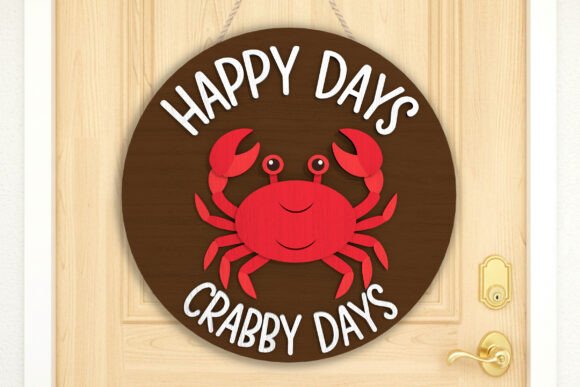
This specific design features a stylized red crab with bold, curved typography arranged in a circular format. While the visual theme is undeniably playful, the underlying file structure requires a different approach than standard 2D vectors. Evaluating this resource involves looking beyond the cute imagery to assess machine compatibility, assembly complexity, and versatility across different substrates. It serves as a practical case study in choosing between complex layered art and simpler, faster-to-produce alternatives.
Layered Vector Designs Versus Single-Cut Alternatives
The primary distinction of the Happy Days Crabby Days Door Sign SVG is its construction method. In the marketplace of digital craft files, designs generally fall into two categories: single-color cuts and multi-layer assemblies. Single-color designs are cut from one sheet of material, often relying on paint or markers for detail. Layered designs, conversely, stack varying shapes to build the image physically.
Visual Impact and Dimension: The layered approach offers inherent advantages in perceived value. The separation between the background circle, the lettering, and the crab character creates natural shadows that change with lighting conditions. This 3D effect is difficult to replicate with paint alone. For sellers at craft fairs or Etsy, this dimensionality often justifies a higher price point compared to flat signs. However, this comes at the cost of production time. Each layer must be cut, weeded, painted individually, and aligned during assembly.
Production Efficiency Tradeoffs: If your priority is high-volume production with minimal post-processing, a layered SVG may introduce bottlenecks. Aligning small pieces, such as the crab’s eyes or claws, requires patience and adhesive precision. Makers who prefer "cut and done" workflows might find this style labor-intensive. Conversely, for those who enjoy the crafting process and want to showcase assembly skills, this format provides a satisfying challenge that results in a premium-looking finished product.
Technical Compatibility and File Format Evaluation
Digital products are only as useful as their compatibility with your specific hardware ecosystem. This resource includes a comprehensive suite of formats: SVG, AI, DWG, EPS, DXF, and PDF. Understanding when to use each file type prevents frustration during the pre-production phase.
- SVG (Scalable Vector Graphics): The industry standard for hobbyist laser cutters like Glowforge, xTool, and Cricut Maker. It retains layer information and color coding, which many laser software platforms use to assign different cut/engrave settings automatically.
- DXF (Drawing Exchange Format): Essential for users of older laser software or CNC routers. Note that DXF files sometimes lose color layer data, appearing as a single continuous line. Users may need to manually separate layers in their software before assigning cut orders.
- AI and EPS: Best suited for designers who wish to modify the artwork in Adobe Illustrator or CorelDRAW before cutting. These formats preserve editable nodes and curves, allowing for customization of text or resizing without pixelation.
- PDF: Primarily useful as a visual reference or template for hand-painting. It is rarely used directly for laser cutting due to potential scaling issues upon import.
Before purchasing, verify that your machine’s native software supports the provided SVG structure. Some proprietary software struggles with complex compound paths or nested groups common in layered designs. Testing a small section of the file first can save significant material waste.
Sizing Flexibility and Material Considerations
The design defaults to 10.5 inches in height, a size optimized for standard door hangers and porch displays. However, vector scalability is a key decision factor. Because the file is mathematically defined rather than pixel-based, it can be resized without quality loss. This flexibility allows the same asset to serve multiple purposes, but physical constraints must be considered during scaling.
Scaling Down: Reducing the sign below 8 inches may compromise structural integrity. Thin elements, such as the crab’s legs or the inner counters of letters like 'a' or 'e', can become fragile in basswood or acrylic. If creating miniature versions for shelf sitters, you may need to thicken stroke widths or simplify details in your vector editor.
Scaling Up: Enlarging the design beyond 12 inches increases material costs and warping risks, particularly with plywood. Larger surface areas also demand more robust adhesives to prevent delamination over time. For large-format signs, consider using MDF or thicker hardwood ply to maintain rigidity.
Material choice significantly influences the final aesthetic. Basswood and birch plywood offer a classic, rustic beach vibe ideal for staining. Acrylic provides a modern, vibrant look but requires different cutting parameters to avoid melting edges. Cork board or felt could be used for softer, child-safe nursery variations. The Happy Days Crabby Days Door Sign SVG is versatile enough for these substrates, provided the user adjusts power and speed settings accordingly.
Assessing Skill Level and Assembly Requirements
Not all digital downloads are created equal regarding user expertise. This product explicitly notes that basic software knowledge is required. This is a crucial filter for potential buyers. Layered SVGs are intermediate-to-advanced resources. Beginners accustomed to print-and-cut stickers may find the alignment process daunting.
Successful assembly of this round sign typically requires jigs or registration marks. Without a physical guide, centering the curved text over the crab and background circle relies entirely on eye estimation. Experienced makers often create custom alignment jigs from scrap cardboard before cutting expensive materials. If you lack experience with multi-part registration, factor in a learning curve and potential test cuts. Alternatively, seek out tutorials specifically focused on "layered sign assembly" before starting.
For professional shops, evaluate whether the assembly time fits your margin model. While the digital file is a one-time cost, the labor per unit is higher than sublimation or UV printing. This design is best suited for businesses positioning themselves as "handcrafted artisans" rather than mass producers.
When to Choose This Design Versus Other Options
Selecting the right asset depends on matching the product attributes to your specific context. The Happy Days Crabby Days Door Sign SVG is a strong candidate in several scenarios, but less optimal in others.
Ideal Use Cases:
- Seasonal Retail Inventory: When stocking up for summer markets where tactile, 3D items stand out against flat prints.
- Beach House Rentals: Durable wood signs withstand humidity better than paper prints and add thematic charm to entryways.
- Personalization Projects: The included AI/EPS files allow easy swapping of generic text for family names or addresses, increasing the item's sentimental value.
- Gift Making: The whimsical tone suits housewarmings or retirement gifts for coastal movers.
When to Consider Alternatives:
- Outdoor Exposure: Unless sealed with marine-grade varnish, layered wood signs degrade in direct rain/sun. For fully exposed exterior doors, consider UV-resistant acrylic or metal blanks instead.
- Rapid Turnaround Events: If you need 50 signs in a weekend, the assembly time for layered designs may be prohibitive. Flat engraving or vinyl application would be more efficient.
- Budget Constraints: Multi-layer projects consume more material (multiple sheets) and adhesive. If minimizing cost-per-unit is critical, single-layer stencil designs are more economical.
Making an Informed Digital Purchase Decision
Ultimately, the value of the Happy Days Crabby Days Door Sign SVG lies in its intersection of charming design and functional engineering. It avoids the common pitfall of overly intricate details that fail during cutting, while providing enough complexity to justify the handmade label. By weighing the assembly requirements against your available time, verifying file compatibility with your specific machine, and considering the end-use environment, you can determine if this resource earns a place in your digital library.
Remember that digital products require proactive management. Organize your downloaded ZIP files immediately, keeping source files separate from working copies. Test new designs on inexpensive materials before committing to premium stock. With proper preparation and realistic expectations regarding the layered format, this design can serve as a reliable template for bringing authentic, textured coastal vibes to your creative repertoire.